

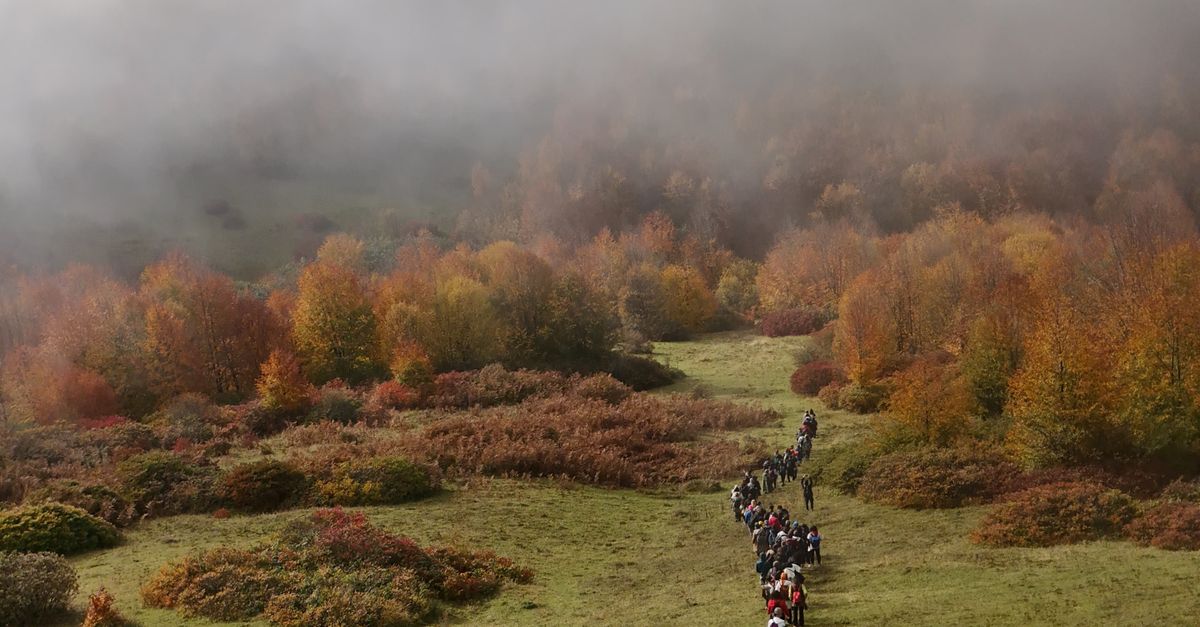
1) The Camino de Santiago, Spain
The Camino de Santiago, frequently referred to as the Way of Saint James, ranks among the globe’s most popular pilgrimage paths, welcoming over 400,000 officially recorded pilgrims each year of late. This trek culminates at the cathedral of Santiago de Compostela situated in northwestern Spain, a sanctuary widely thought to shelter the mortal remains of the apostle James.
There are multiple routes, with the Camino Francés being the most popular at roughly 500 miles. Pilgrims walk, cycle, or occasionally ride on horseback across varied landscapes, from the Pyrenees Mountains to the rolling hills of Galicia. While historically rooted in medieval Christianity, today’s travelers include spiritual seekers, cultural enthusiasts, and adventure travelers.
Key characteristics:
- Comprehensive network featuring accommodations, directional signs, and pilgrim credentials
- Deep feeling of camaraderie among hikers
- Fusing spiritual dedication with personal contemplation
2) Hajj to Mecca, Saudi Arabia
The Hajj stands as the biggest yearly religious assembly globally, seeing the participation of roughly two to three million Muslims on an annual basis. Serving as one of the Five Pillars of Islam, this journey is compulsory at least once during a lifetime for followers who possess the necessary physical and financial capacity.
The pilgrimage takes place in and around the holy city of Mecca and includes a series of prescribed rituals over several days, such as circling the Kaaba, standing in prayer on the plain of Arafat, and symbolic acts of devotion. Due to its scale, the Saudi authorities employ advanced crowd management systems, transportation networks, and health services to ensure safety.
Significance:
- Deep spiritual cleansing and togetherness
- Rigidly organized ceremonies
- Worldwide portrayal of the Islamic ummah
3) Kumbh Mela, India
Kumbh Mela stands out as the biggest peaceful assembly worldwide, drawing crowds of over 50 million individuals on primary immersion days during major celebrations. Hosted cyclically across four riverside urban centers, this festival takes place once every dozen years at every designated site, alongside smaller intermediate congregations.
Pilgrims congregate to take a dip in holy rivers, convinced that the currents wash away transgressions and facilitate spiritual emancipation. The provisional settlements erected for the occasion feature canvas lodgings, hygiene infrastructure, and healthcare units, constituting one of the most intricate temporary urban configurations globally.
Distinctive elements:
- Mass ritual bathing at astrologically determined times
- Participation of ascetics and monastic orders
- Significant economic and logistical planning
4) The Shikoku Pilgrimage, Japan
Spanning roughly 750 miles across Japan’s Shikoku Island, the Shikoku Pilgrimage is a route connecting 88 sacred temples. Grounded in Buddhist heritage, the journey pays homage to the monk Kukai, whom tradition credits with founding a vast number of these holy sites.
Pilgrims traditionally walk the entire route, dressed in white garments symbolizing purity and spiritual rebirth. The journey may take six to eight weeks on foot. Although modern transportation is available, many choose to walk to experience personal discipline and introspection.
Highlights:
- Circular route encouraging continuous reflection
- Strong local hospitality culture
- Combination of mountain paths, coastal roads, and rural villages
5) The Via Francigena, Europe
The Via Francigena stretches roughly 1,200 miles from Canterbury in England to Rome in Italy. It gained prominence in the Middle Ages as a route for pilgrims traveling to the Vatican.
Revived in recent decades, the path crosses England, France, Switzerland, and Italy, offering a diverse cultural and geographical experience. Though less crowded than the Camino de Santiago, its popularity continues to grow among long-distance walkers seeking historical depth and scenic variety.
Notable aspects:
- Transnational cultural heritage
- Alpine crossings and Tuscan countryside views
- Combination of religious devotion and heritage tourism
6) The Kumano Kodo, Japan
The Kumano Kodo is made up of ancient mountain tracks situated across Japan’s Kii Peninsula, winding toward three magnificent shrines known together as Kumano Sanzan. Spanning a history of more than 1,000 years, this destination stands as one of the rare pilgrimage paths honored with World Heritage status.
Pilgrims trek across wooded mountains, ancient stone steps, and isolated hamlets. Traditionally pursued by sovereigns and nobles, the journey represents spiritual renewal via harmony with the outdoors.
Appeal:
- Sacred natural landscapes
- Integration of Shinto and Buddhist traditions
- Well-preserved historical pathways
7) The Route to Lourdes, France
Lourdes attracts approximately 3 to 5 million visitors each year. The pilgrimage centers on the Sanctuary of Our Lady of Lourdes, where a young girl reported Marian apparitions in 1858.
Pilgrims arrive searching for healing and spiritual revitalization, frequently joining in processions and immersing themselves in spring water that numerous individuals consider to possess therapeutic qualities. The location features comprehensive amenities designed for ailing and physically challenged travelers, highlighting a deep commitment to empathy and support.
Core elements:
- Healing-focused devotion
- Large-scale organized pilgrim groups
- Strong emphasis on volunteer service
8) The Mount Kailash Pilgrimage, Tibet Autonomous Region
Mount Kailash holds deep sacred significance for various faiths, such as Hinduism and Buddhism. A 52-kilometer trek encircles this revered peak at towering elevations, frequently surpassing 15,000 feet above sea level.
Unlike other routes, climbers do not ascend the summit, as it is considered inviolable. The journey is physically demanding due to thin air and rugged terrain. Completing the circuit is believed to bring profound spiritual merit.
Challenges and meaning:
- Extreme environmental conditions
- Multi-faith reverence
- Symbolism of cosmic center and spiritual purification
These eight pilgrimage routes illustrate humanity’s enduring desire to seek meaning through movement. Whether through structured ritual, communal bathing, mountain solitude, or centuries-old footpaths, pilgrims continue to traverse continents in search of transformation. Across cultures and faiths, the act of journeying itself becomes a sacred practice, reminding travelers that devotion is often found not only at the destination but along every step of the path.