

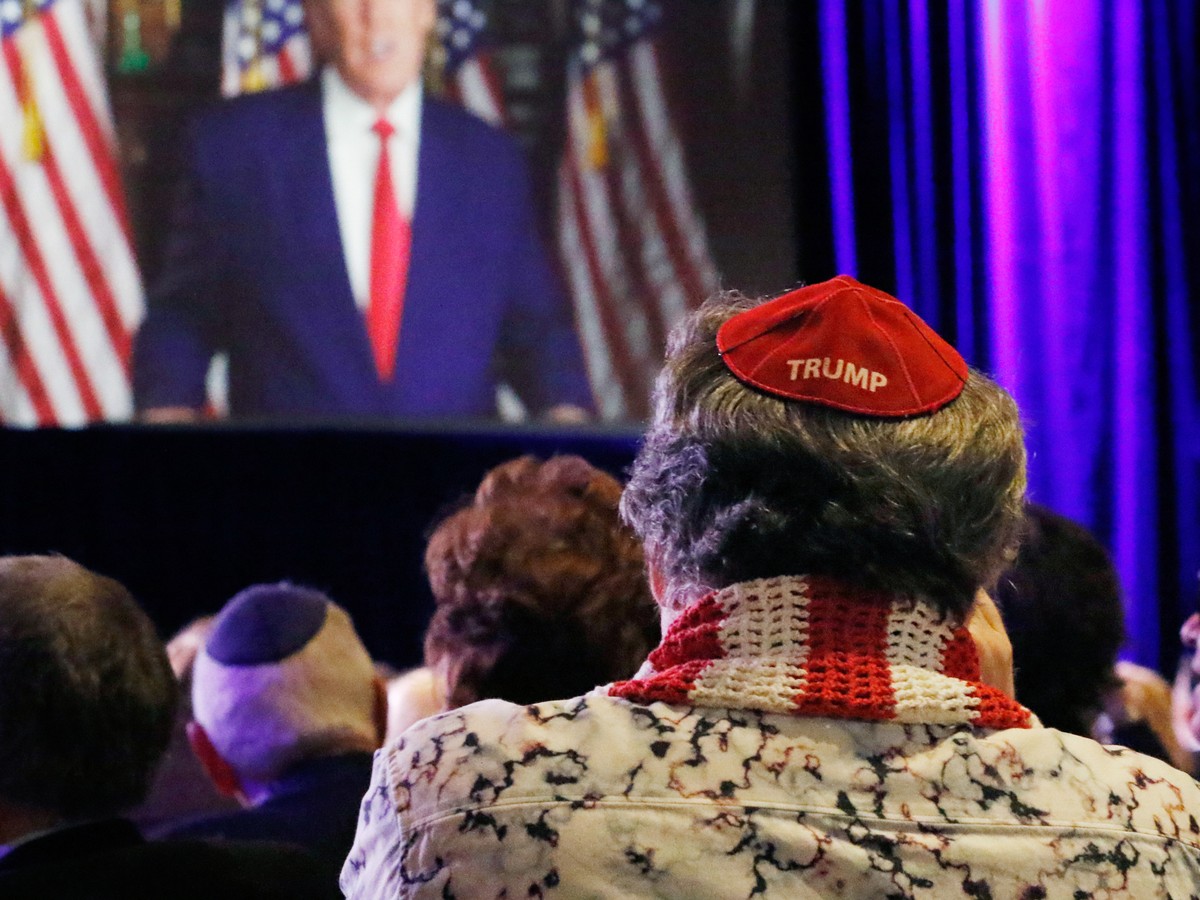
In a move that has sparked debate across political and religious circles, the Trump administration asserted that “many Jewish groups” were in favor of a contentious nominee for a key government position. However, a closer look at this claim reveals that several of the Jewish organizations cited were either unaware of the nominee or had not expressed any position regarding the appointment, raising questions about the accuracy of the administration’s statements.
The debate revolves around the selection of an individual whose opinions and previous remarks have been met with disapproval from different civil rights groups and religious communities. The government’s strategy to portray the nominee as widely supported among Jewish organizations seemed to be an attempt to mitigate increasing resistance and showcase a perception of extensive endorsement, especially in a community that is frequently attentive to matters of acceptance, diversity, and individual rights.
The nominee in question was put forward for a role that involves significant influence over civil rights enforcement, making the choice particularly consequential. The position carries the responsibility of overseeing key policies and initiatives that impact vulnerable populations, religious minorities, and the protection of constitutional rights. Against this backdrop, the administration’s emphasis on supposed Jewish support was likely intended to shore up political backing and blunt criticism.
However, when journalists and advocacy organizations contacted the bodies referenced by the government, a number of them indicated they did not recognize the candidate’s name or had never been contacted for their viewpoint. A few organizations mentioned they hadn’t formed an official stance on the nomination, while others were astonished to be linked with the administration’s assertion.
Leaders have raised worries about the potential for faith groups to become politicized and how religious organizations might be used to legitimize government choices. Representatives from numerous Jewish groups highlighted the need for any candidate to be evaluated on their history, credentials, and proven dedication to fairness and justice, rather than through presumptions or political convenience.
Here’s the revised text:
Numerous Jewish advocacy organizations prioritize areas like freedom of religion, safeguarding against discrimination, and ensuring civil rights. Consequently, when individuals considered not supportive of these principles are nominated, it tends to attract attention. Various national groups that convey different Jewish viewpoints have openly requested a clear examination process and discussions about the consequences of the appointment.
The administration’s handling of this situation also reflects broader patterns in political communication, where claims of support from religious or minority communities are sometimes made without clear evidence. This strategy can be effective in the short term for shaping narratives but risks long-term credibility when challenged by facts.
The incident has highlighted the significance of accuracy in political communications. In a time when fact-checking is immediate and digital interactions are prevalent, mistakes are swiftly revealed, frequently causing harm to reputations. For groups such as American Jews, who possess diverse political and theological perspectives, being wrongly depicted as having uniform opinions can be both misleading and harmful.
Within the Jewish community, responses to the candidate have been mixed. Certain conservative factions have shown tentative support due to common policy goals, whereas progressive groups have voiced concerns regarding the nominee’s previous stances on civil rights, racial issues, and inclusivity. This range of perspectives underscores the complex dynamics of religious and cultural communities that resist simple political categorization.
The debate also encompasses broader concerns about the involvement of religious entities in public affairs. Numerous organizations rooted in faith participate in advocacy driven by their moral principles while ensuring they remain nonpartisan. Being forced into political stories without permission can jeopardize their efforts and distance their supporters.
For the Trump administration, this event is not the first occurrence where assertions of backing from the community have been questioned. Comparable instances have transpired previously with different minority groups and policy actions. Such trends have prompted critics to demand more transparency and sincerity in the administration’s interactions with various communities.
The nomination itself remains a point of contention. Supporters argue that the candidate brings valuable experience and a firm commitment to the rule of law. Detractors, however, point to past statements and affiliations that they believe reflect an insensitivity to marginalized groups and a narrow interpretation of civil rights protections.
At the heart of the debate is a fundamental question about the role of government in safeguarding the rights of all citizens. Appointments to positions of authority over civil rights enforcement carry significant weight, as they influence how laws are interpreted and applied. Ensuring that nominees are both qualified and aligned with the principles of justice and equality is crucial to maintaining public trust.
As this situation unfolds, Jewish organizations and other civil society groups are likely to continue advocating for thorough review processes and meaningful dialogue. Many have called on lawmakers to ask tough questions, review the nominee’s record in detail, and consider the broader implications for civil rights enforcement in the United States.
The broader lesson from this episode is clear: communities are not political pawns, and claims of endorsement must be rooted in reality. Inaccurate representations not only risk alienating those communities but also undermine the integrity of the political process. Respect for diversity of opinion, transparency, and open engagement are essential components of a healthy democracy.
Currently, the fate of the nominee is unclear, and the administration is experiencing heightened examination regarding its portrayal of the perspectives of religious and minority communities. This situation highlights the fact that in a diverse and multifaceted society, the opinions of communities cannot be simplified to basic assertions or political sound bites.
As the debate continues, observers across the political spectrum are watching closely to see whether the administration will adjust its approach to community engagement and whether the nomination process will proceed with the fairness and thoroughness that such appointments demand.