

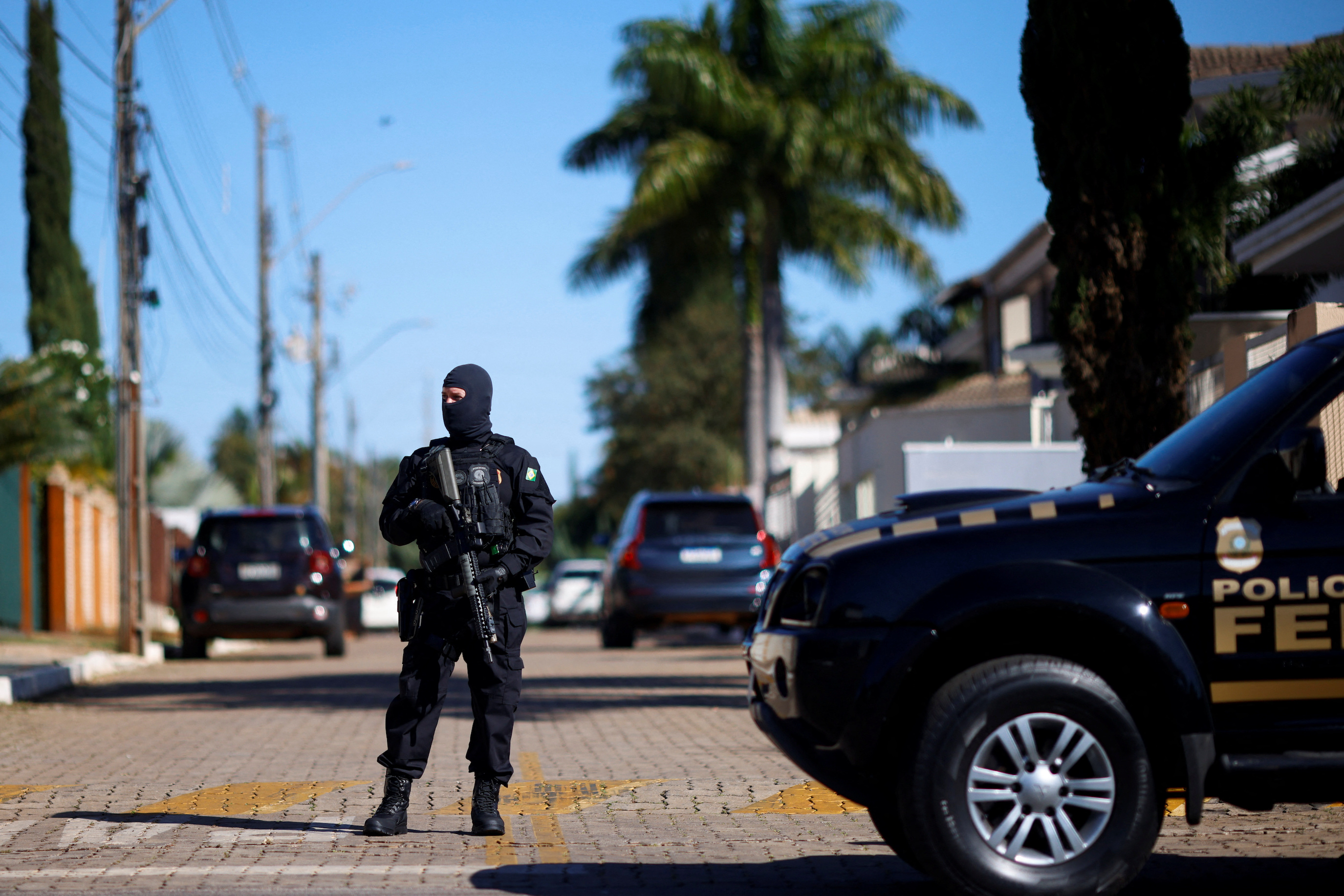
Brazil’s former president Jair Bolsonaro recently faced intensified legal pressures when federal police raided his home and political party offices in Brasília. Authorities, citing concerns that Bolsonaro might attempt to flee Brazil, also fitted him with an electronic ankle monitor. Additional legal measures include a nightly curfew, a ban on social media use, and prohibitions against interacting with foreign diplomats or approaching embassies. These actions are part of a mounting criminal case alleging Bolsonaro tried to overturn the results of the 2022 presidential election through a coup plot.
The ruling to establish these terms was made by the Supreme Court of Brazil, highlighting the danger of escape due to previous events—like Bolsonaro spending a night at the Hungarian embassy amidst former probes—and his son’s vigorous advocacy abroad. The court’s position suggested that surveillance and limitations were necessary to guarantee Bolsonaro’s presence for future judicial proceedings.
The raid resulted in confiscating Bolsonaro’s travel document, along with uncovering large sums of cash and technology equipment. Federal authorities stated they executed legally permitted search orders at Bolsonaro’s private home and his political group’s main office. These actions are linked to a wider probe concerning an alleged scheme to hinder the peaceful change of leadership after Bolsonaro’s 2022 loss.
In response to the raids, Bolsonaro described the entire operation as a national humiliation. He maintained his innocence and asserted he had no intention of fleeing Brazil. He also expressed anger over the ankle monitor, stating that he felt his rights were being violated. Bolsonaro reiterated that his political influence remained strong, insisting he still plans to run again despite being barred from holding office until at least 2030.
Bolsonaro’s legal representatives have expressed disapproval of the steps taken, portraying them as driven by politics. They contend that these limitations hinder his chances to engage in political campaigns or pursue governmental positions, accusing the judicial system of exceeding its authority. In the meantime, his son, Congressman Eduardo Bolsonaro, has actively voiced his opinion from outside the country. He has called for global awareness regarding what he labels as his father’s victimization and has reached out to international politicians, especially those in the United States.
The domestic fallout has been immediate. President Luiz Inácio Lula da Silva condemned foreign intervention, particularly citing threats of U.S. tariffs on Brazilian exports as interference in Brazil’s judicial process. The government, along with conservative critics, rallied around Brazil’s sovereignty, framing Bolsonaro’s legal procedure as a matter of upholding national institutions and the rule of law.
On the global stage, the circumstances have increased pressure on local and diplomatic relations. Conflicts intensified when travel limitations were placed on judges from Brazil associated with the proceedings. At the same time, ex-President Donald Trump of the United States expressed his backing for Bolsonaro, criticizing the judicial process as a “witch hunt” and warning of potential financial repercussions for Brazil. These actions have faced opposition from Brazilian authorities who emphasize that Brazil’s judicial matters must remain uninfluenced by external forces.
Bolsonaro’s potential strategy to seek asylum abroad is now heavily scrutinized. With his passport confiscated and an ankle monitor tracking his movements, opportunities to leave Brazil have been significantly narrowed. Any attempt to file for asylum would require navigating stringent judicial and diplomatic barriers, compounded by international legal considerations.
The trial is reaching a pivotal stage. Bolsonaro and other defendants are accused of crimes such as attempting a coup, hindering the democratic process, and inciting violence with a political motive. If found guilty, Bolsonaro might spend numerous years incarcerated. His legal team is anticipated to vigorously challenge the charges, arguing that his actions were driven by sincere worries about the election’s fairness rather than an unlawful attempt to seize authority.
Analysts interpret Bolsonaro’s ongoing refusal and legal conflicts as representative of a wider international trend: the emergence of populist figures who question institutional constraints and form global partnerships to avoid national responsibility. The situation in Brazil illustrates a struggle between democratic principles and political power, prompting worries about balancing individual freedoms with preserving the constitutional framework.
People are divided. Bolsonaro maintains a faithful following that perceives him as suffering from biased prosecution. On the other hand, Lula’s backers and numerous centrists believe that legal actions are crucial for safeguarding democracy. Polls indicate that Bolsonaro possesses substantial backing, particularly from conservative individuals, yet the existing legal constraints could hinder his capacity to continue campaigning.
In the future, three pivotal advancements will influence the direction of this case:
- Judicial proceedings – the ruling on Bolsonaro’s culpability will establish a benchmark. Should he be found guilty, it might push him out of politics for a long time, whereas exoneration or lesser penalties could encourage his advocates and alter Brazil’s political scene.
- International diplomatic issues – actions by other nations—especially regarding penalties, travel bans, or economic actions—will affect both the perception of the trial and the overall Brazil-U.S. relationship.
- Internal political landscapes – Bolsonaro’s capacity to engage with his base from abroad, rally political support, or work indirectly through his associates may influence his significance leading up to future elections.
Currently, Bolsonaro is under observation, dealing with both legal limitations and symbolic implications as he exhibits defiance. His home detention, electronic bracelet, and restricted movements signify a pivotal time in Brazil, emphasizing the significant obstacles democracies encounter when leaders contest judgments via institutional means instead of democratic processes.
The outcome of Bolsonaro’s legal saga will have consequences far beyond his political fate. It will test Brazil’s adherence to democratic accountability, the impartiality of its institutions, and the limits of populist power. As the trial progresses, the world will watch whether Brazil’s democracy prevails—or whether political polarization continues to redefine governance in the country.