

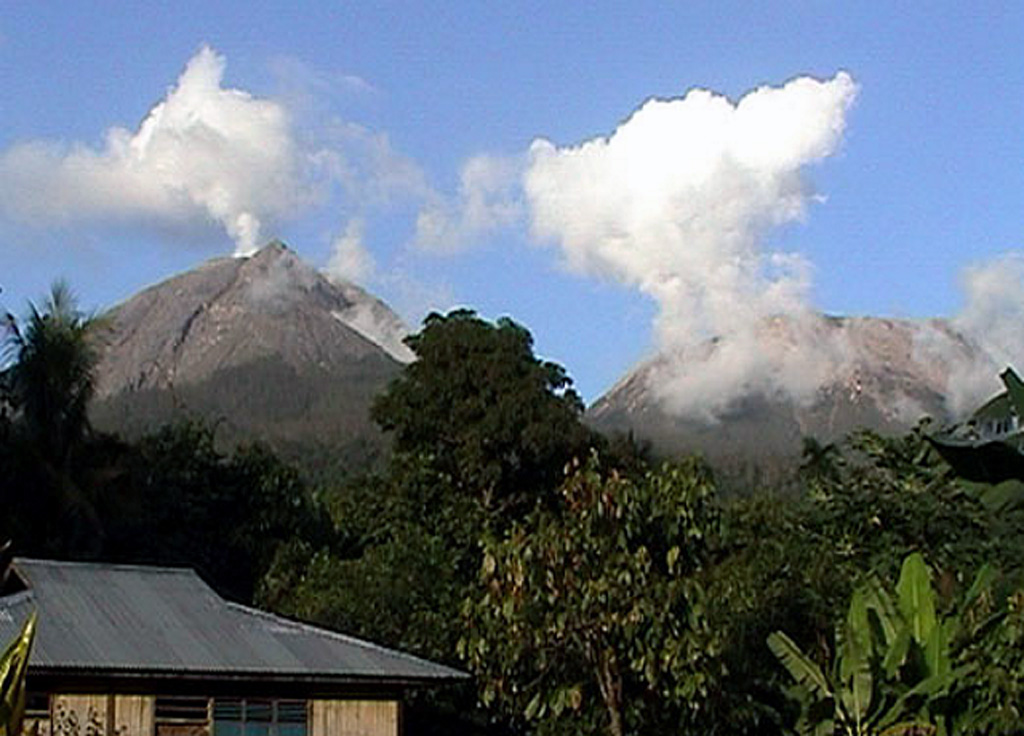
In a striking demonstration of nature’s might, Indonesia’s Mount Lewotobi Laki Laki volcano erupted recently, sending a massive ash plume approximately 11 miles skyward. This notable volcanic occurrence has captured interest not only due to its immediate visual impact but also because of its wider effects on aviation, public safety, and environmental conditions in the area.
Located on Flores Island in East Nusa Tenggara province, Mount Lewotobi Laki Laki is part of Indonesia’s vast and volatile volcanic landscape. The country sits along the Pacific Ring of Fire, an area known for frequent seismic and volcanic activity due to the movement of tectonic plates. With over 130 active volcanoes, Indonesia is home to more volcanoes than any other country, and eruptions, both minor and major, are part of the geological reality for millions of its citizens.
The latest volcanic activity of Lewotobi Laki Laki, also known as “the Male Lewotobi” (located near “Female Lewotobi” volcano), initiated with a powerful blast that propelled ash and volcanic substances far up into the stratosphere. The plume of ash, visible from long distances, soared to nearly 18 kilometers (11 miles) above sea level, leading aviation officials, nearby communities, and emergency response teams to raise immediate alarms.
Volcanic events that send ash to great heights create major risks for aviation. The ash from volcanoes can harm airplane engines, impede visibility, and disrupt navigation systems. Due to the eruption, authorities in aviation announced a red alert for the area’s flights, advising pilots to steer clear of the airspace near the volcano. A number of local flights were either canceled or redirected as a safety measure, adhering to the worldwide guidelines established to safeguard aircraft from encounters with volcanic ash.
On site, officials swiftly took action to evaluate potential hazards for neighboring communities. Regional disaster response units, in coordination with Indonesia’s Center for Volcanology and Geological Hazard Mitigation (PVMBG), increased the warning status for Lewotobi Laki Laki and set up areas for evacuation. Villages within a defined range were instructed to get ready for possible evacuation if the eruption worsens or lava threatens residential zones.
Fortunately, initial reports indicated no immediate casualties, though authorities remained vigilant as ashfall was detected in several nearby communities. Volcanic ash can have serious health effects, particularly for individuals with respiratory conditions. Prolonged exposure can irritate eyes, skin, and lungs, making it essential for residents to use protective masks and stay indoors when possible. Emergency response teams distributed masks and provided information to help communities protect themselves from the ash’s harmful effects.
Beyond their immediate hazards, eruptions such as the one from Mount Lewotobi Laki Laki possess intricate environmental effects. Ash from these eruptions can harm agriculture, taint water resources, and disturb local habitats. Occasionally, the emission of sulfur dioxide and other gases might result in short-term atmospheric cooling, although usually only larger eruptions cause significant global variations. Researchers constantly observe the eruption to gain deeper insight into its environmental repercussions.
The eruption also brings renewed focus to Indonesia’s disaster preparedness systems. The country has made significant investments in early warning systems, seismic monitoring, and community education over the past two decades, particularly after the devastating 2004 Indian Ocean tsunami and subsequent natural disasters. These systems aim to provide timely alerts to at-risk populations, allowing for faster evacuations and reduced loss of life.
However, obstacles persist. A significant number of volcanoes in Indonesia are situated in outlying or economically disadvantaged areas with limited infrastructure. Guaranteeing that these communities receive prompt information, along with ensuring access to sufficient shelter and supplies, necessitates collaboration among governmental organizations, local officials, and global partners. The eruption at Lewotobi Laki Laki highlights the critical need to uphold and enhance these arrangements in a nation where volcanic threats are ever-present.
For individuals residing near Lewotobi Laki Laki, volcanic eruptions are a familiar yet uncertain aspect of daily life. Numerous local communities have lived alongside the volcano for many generations, relying on ancestral knowledge, spiritual beliefs, and community ties to manage the dangers associated with eruptions. On certain occasions, ritual offerings and prayers are performed in an attempt to placate the volcano’s “spirit,” highlighting the profound cultural importance that volcanoes have in Indonesian society.
In addition to its immediate safety concerns, the eruption of Lewotobi Laki Laki is likely to have economic repercussions, particularly in the agricultural sector. Ashfall can smother crops, damage farmland, and disrupt supply chains for local produce, affecting livelihoods in an already economically vulnerable region. Recovery from volcanic events often requires not only emergency assistance but also long-term support to rebuild agricultural productivity and community resilience.
The tourism industry, which plays an increasingly important role in Indonesia’s economy, may also be impacted by the eruption. Flores Island, known for its natural beauty, hiking trails, and proximity to the Komodo National Park, attracts visitors from around the world. While volcanic activity can deter tourists in the short term, it also draws interest from adventure travelers and geotourism enthusiasts. Careful management of both safety and visitor interest will be essential in the weeks and months following the eruption.
From a scientific perspective, each volcanic eruption provides valuable data for researchers studying earth systems, climate impacts, and geological activity. The eruption of Mount Lewotobi Laki Laki is no exception. Volcanologists are using satellite imagery, seismic monitoring, and on-the-ground observations to track the behavior of the volcano, assess potential risks, and refine models that predict future activity. These scientific efforts not only help protect local populations but also contribute to the global understanding of volcanic processes.
One of the more unpredictable aspects of volcanic eruptions is the potential for escalation. Some eruptions remain brief and moderate, while others evolve into prolonged episodes of activity with larger explosions, lava flows, and pyroclastic surges. Monitoring agencies remain cautious, as changes in volcanic behavior can occur with little warning. As such, ongoing surveillance of Lewotobi Laki Laki is essential for providing timely alerts and guidance to affected communities.
Climate considerations also play a role in the broader context of volcanic eruptions. While short-term cooling effects from volcanic aerosols have been documented in cases of massive eruptions, smaller events like Lewotobi Laki Laki’s typically have localized environmental impacts. However, with climate change influencing weather patterns, rainfall, and vegetation, the interaction between climate variables and volcanic landscapes is an area of growing research interest.
In the days following the eruption, government agencies and international humanitarian organizations began working together to provide relief supplies and monitor the situation. Volcanic eruptions, though natural, can strain already limited resources in developing regions, underscoring the importance of global solidarity and disaster response capacity.
For travelers and residents alike, the eruption serves as a powerful reminder of nature’s unpredictability. While modern technology allows for improved prediction and preparedness, the forces of the Earth remain beyond human control. Respect for these natural processes, combined with scientific research and community resilience, forms the foundation of effective response and adaptation.
The story of Mount Lewotobi Laki Laki is, in many ways, emblematic of Indonesia’s broader relationship with its dynamic geology. The same forces that create breathtaking landscapes and fertile soils also pose profound risks. Balancing these realities requires vigilance, preparation, and a deep respect for the living earth beneath our feet.
When the volcanic dust descends and the area anticipates more progress, the insights from this occurrence—both practical and reflective—keep emerging. Through advanced surveillance, better emergency measures, or increased community understanding, every volcanic incident acts as a driving force for education and strength against the formidable forces of nature.