

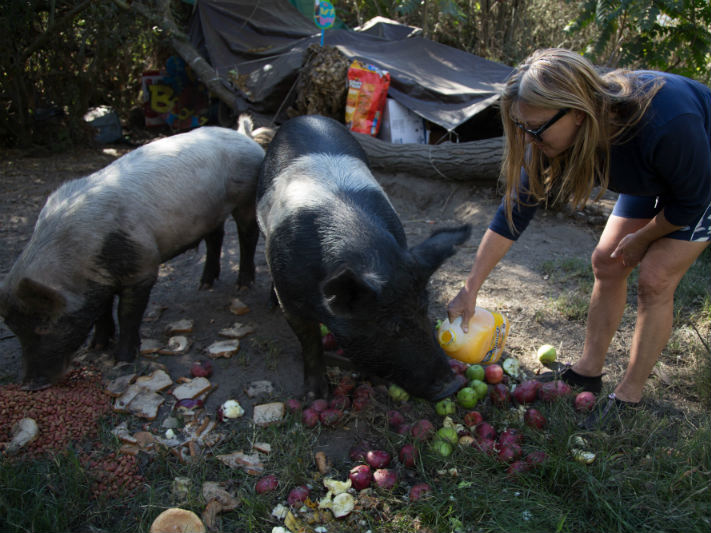
In a secluded area of Mexico, an unusual scientific project is taking place with the goal of enhancing forensic investigations and boosting the nation’s capability to find missing persons. Scientists are employing pig remains dressed in human attire and interred in secret graves to mimic actual scenarios of bodies concealed by criminal organizations. This method, although atypical, is grounded in established forensic principles and is aimed at supplying essential information on decomposition in regional settings.
The project, led by forensic specialists and supported by academic institutions and some local authorities, addresses a pressing national crisis. With thousands of people reported missing across the country, and many believed to be buried in unmarked graves, the need for accurate and efficient recovery methods has never been more urgent.
Mexico has faced the persistent issue of forced disappearances for many years. Official statistics reveal that thousands of people are still missing, with a significant number believed to have fallen prey to organized crime. Even with the endeavors of police and forensic experts, the vast landscape and complicated environmental factors make finding and recognizing remains a challenging mission.
One of the key difficulties in these investigations is understanding how human bodies decompose in different types of soil, climate conditions, and burial scenarios. Factors like humidity, temperature, clothing, depth of burial, and the presence of scavengers can all affect the rate and nature of decomposition. Without localized research, forensic teams are forced to rely on generalized data that may not align with Mexico’s diverse environments.
In forensic science, pigs are frequently used as surrogates for human bodies because their internal anatomy, fat content, and skin structure closely resemble those of people. Their use in decomposition studies allows researchers to gain valuable insights without the ethical complications of working with human cadavers.
In this examination conducted in Mexico, pigs are clothed in garments akin to what victims likely wore and interred in surroundings that mimic those utilized by criminal organizations trying to hide corpses. Over the course of several weeks and months, researchers observe the remains, investigating how diverse environmental and situational factors affect the decomposition of tissues, bones, and clothing.
The aim is to develop an extensive collection of decomposition patterns relevant to the Mexican setting. This data can assist forensic anthropologists in approximating the time since death, deciding on burial techniques, and enhancing the use of detection instruments such as ground-penetrating radar or cadaver dogs.
The use of animal carcasses in research inevitably raises ethical questions, especially when conducted in sensitive areas. However, the scientists involved in the project emphasize that all procedures are carried out with transparency, regulatory approval, and a focus on public good. The animals are not killed for the experiments but are obtained from farms after natural death or slaughter for food consumption, ensuring that the practice does not promote harm.
Local communities, many of which are profoundly impacted by the crisis of disappearances, have shown varied reactions. Some appreciate the research as an essential move towards justice, while others are uneasy about the presence of graves—even if they are only replicas—in their areas. The researchers collaborate closely with these communities, organizing informational sessions to clarify the objectives and significance of the studies and to address any inquiries regarding the ethical use of animals in scientific research.
The practical applications of this research are already making an impact. Early findings have provided new insights into how quickly clothing deteriorates under various burial conditions, how different fabrics interact with bodily decomposition, and how burial depth influences preservation. This knowledge directly contributes to improving search strategies, especially in cases where time is a critical factor.
For instance, forensic teams may now be able to prioritize search areas based on likely decomposition states or adjust the timing and tools used in field recovery operations. The findings also support the development of training materials for forensic investigators and volunteers who participate in search brigades—often led by families of the missing.
Mexico’s missing persons crisis is one of the largest in the world. While government agencies have made commitments to address the issue, limited resources and institutional challenges often slow down progress. In this context, scientific innovation becomes a vital complement to official efforts. By applying forensic science to real-world conditions in Mexico, researchers aim to give investigators the tools they need to be more precise, more efficient, and ultimately, more successful in bringing closure to families.
The study also highlights the importance of collaboration between science and civil society. Families of missing individuals often lead the charge in searches, sometimes uncovering mass graves themselves. These community efforts, combined with advances in forensic science, can create a more coordinated and impactful response to disappearances.
The primary goal of the project is to establish a comprehensive, publicly accessible forensic database featuring decomposition timelines, chemical indicators, and data on soil interactions specific to areas in Mexico. This tool aims to aid not just local researchers but also global forensic groups operating in comparable conditions.
Furthermore, the study aims to enhance wider discussions on human rights and the importance of science in promoting justice. As the database expands, it could also serve as a training tool for future forensic experts and impact national policies regarding the management of missing persons cases.
In a landscape marked by tragedy and uncertainty, the use of pigs in decomposition studies may seem unusual, but the intention behind the practice is deeply human. Every buried carcass represents a step toward a more accurate understanding of how to find and identify the lost. For the families searching for answers, each advancement brings a sliver of hope—hope that science, perseverance, and compassion can work together to uncover the truth buried beneath the soil.